dropshipping in pakistan
Dropshipping in Pakistan (2026): How It Works, Suppliers & Real Profit Math
5 October 2026 · 9 min read
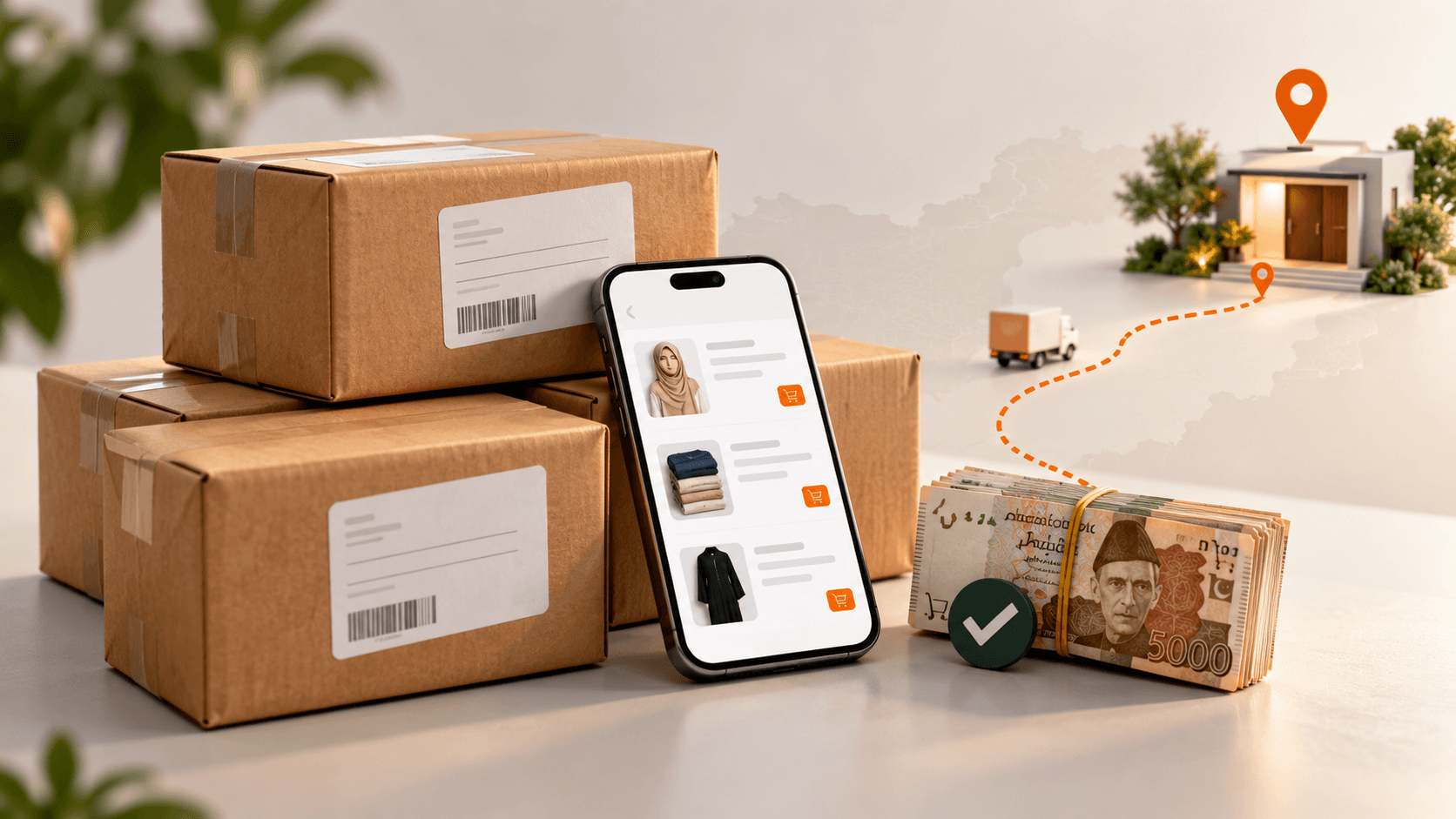
Dropshipping in Pakistan means you sell a product online, a supplier stores and ships it to your customer, and you keep the difference between your price and the supplier's price. You never touch stock. It works — we see stores do it every month — but the version that works here looks nothing like the "AliExpress to America" model you see on YouTube.
This guide covers how it actually runs in Pakistan in 2026: which supplier model to use, how to pick a supplier, where the money really goes, and the order to set things up in.
The two kinds of dropshipping in Pakistan
1. Local dropshipping (the one that works)
A Pakistani supplier or wholesaler holds the stock. You list their products on your store, take the order, and pass it on. They pack it, hand it to a courier, and the customer pays cash on delivery. After the courier remits the cash, you get your margin.
This fits how Pakistan buys: delivery in 2–5 days, COD, and returns the supplier can actually receive. That is why almost every profitable Pakistani dropshipping store we've seen runs on local suppliers.
2. International dropshipping (mostly doesn't)
Ordering from overseas suppliers for Pakistani customers means weeks of shipping, customs delays and no COD. Pakistani buyers won't prepay and wait three weeks for an unknown store.
Selling abroad from Pakistan (a US or UK store) is a different business. It can work, but you hit payment problems first: Shopify Payments, Stripe and PayPal aren't directly available to Pakistan-registered businesses, so you need a compliant way to collect payments before you spend a rupee on ads.
Is dropshipping legal in Pakistan?
Yes. Reselling products online is a normal business. What you do need is to treat it like one: be honest in product claims, honour returns, and get your tax registration (NTN) in order once you're earning. Couriers and payment providers will ask for business details as you grow anyway.
How to choose a dropshipping supplier in Pakistan
Your supplier decides your delivery speed, your return rate and your reviews. Before you list a single product, ask every supplier these:
- Is the stock real? Ask for a video of the actual item and the quantity on hand. "Coming next week" kills ad campaigns.
- Dispatch time. Same or next day. Every extra day in transit raises refusals at the door.
- COD remittance cycle. How many days until you get paid after delivery? This sets how fast you can reinvest in ads.
- Returns. Who pays the return charge, and how fast is a returned item restocked?
- Packing quality. Damaged parcels become refusals and one-star reviews.
- Content rights. Can you use their photos and videos — and are they good enough to run ads with?
- Minimum price rules. Some suppliers fix a minimum resale price. Check it leaves you a margin.
Start with two or three suppliers, place a test order from each to your own address, and judge them on what arrives — not on their WhatsApp catalogue.
The real profit math (PKR)
Here's an illustrative product: you sell it for PKR 2,499, the supplier charges PKR 1,300, courier delivery is about PKR 230, and your Meta ads cost PKR 400 per order placed. Look what happens across 100 orders at two different return rates:
| Per 100 orders | 25% returned | 10% returned |
|---|---|---|
| Delivered orders | 75 | 90 |
| Cash collected | 187,425 | 224,910 |
| Supplier cost (delivered only) | −97,500 | −117,000 |
| Courier, all shipments | −23,000 | −23,000 |
| Return charges | −5,750 | −2,300 |
| Ad spend | −40,000 | −40,000 |
| Profit | 21,175 | 42,610 |
Same product, same ads — profit doubles when returns drop from 25% to 10%. In Pakistan, your return rate matters as much as your ads. Read how to reduce RTO on COD orders before you scale, and use the ROAS calculator to find the ad cost your margin can carry.
How to start dropshipping in Pakistan: the order that works
- Pick one niche and validate it. Don't list 200 random products. Pick a category, then test demand first — here's how to validate a product.
- Lock in a supplier using the checklist above, with a test order.
- Build a proper store. Social-only selling caps out fast. A Shopify store gives you your own customer list, tracking for ads and a brand people trust. Keep it simple: fast pages, real photos, clear delivery and return info, COD at checkout.
- Confirm every order. A quick WhatsApp or call confirmation before dispatch filters fake and impulse orders. This is the cheapest RTO fix there is.
- Run ads with tracking in place. Install the Meta Pixel and Conversions API before launch, start with a small daily budget, and test several creatives. See what Facebook ads really cost in Pakistan.
- Reconcile your COD money. Match every courier remittance to every order. Stores lose money here without noticing — see COD reconciliation for Shopify.
Mistakes that kill new dropshipping stores
- Copying the same product everyone else runs. If ten pages run the same video, you're competing on price with no margin.
- Judging ads on orders, not delivered orders. A 4x ROAS means nothing if a third of orders come back.
- Skipping order confirmation to "save time" — it costs you in return charges.
- Scaling before the supplier can keep up. Stock-outs mid-campaign reset your ad learning.
- Buying a course before running a single test. PKR 5,000 in ads teaches more than most courses.
Should you dropship or build a brand?
Dropshipping is a great way to learn ads and find a winning product with little capital. Once a product proves itself, the money is in owning it: buying stock, better packaging, your own brand, and repeat customers. Most of the brands we scale started exactly this way.
Want help setting it up?
We build Shopify stores and run Meta ads for Pakistani ecommerce brands — with COD, order confirmation and tracking set up properly from day one. See our Shopify development and Meta ads services, check pricing, or message us on WhatsApp.